FOR A BOLD & BETTER FUTURE.
As a globally engaged business, we have a special responsibility. We know that our activities have an impact on the planet. It is our aim to keep this as low as possible to ensure a bold and better future for the current and future generations. Our activities are entirely in the spirit of ´FOR A BOLD & BETTER FUTURE`. To live up to our responsibility, we take a strategic approach and base our decisions on a firm foundation of our sustainability activities.
OUR SUSTAINABILITY STRATEGY AT A GLANCE
OUR 5 KEY STRATEGIC PILLARS & THE TARGETS WE STRIVE FOR



DEEP-DIVE INTO OUR STRATEGIC KEY PILLARS
-
1. INCREASE CIRCULARITY
Our commitment: 80% products designed for circularity* by 2030
- Our circular styles fulfil all three criteria. They are made:
- with renewable or recycled raw materials
- to be made again: our products are recyclable
- to last longer: our products are designed for longevity
- We offer various circular services, including a resale in collaboration with Sellpy in six European countries, where free trade‑in kits are provided.
We also offer repair services, which are generally available in all HUGO BOSS stores and are free of charge for members of the HUGO BOSS loyalty program.
In addition, online tutorials help customers care for and repair their garments themselves.
*According to the HUGO BOSS material strategy
- Our circular styles fulfil all three criteria. They are made:
-
2. DRIVE DIGITIZATION & DATA ANALYTICS
Our commitment: >70% digital creation from design to sales by 2030*
- Digital creation entails the transformation of physical product development steps into digital processes: from product design and digital prototyping to interactive product presentations based on 3D simulation and animation.
- By using 3D simulations to create "digital prototypes", we have already been able to significantly cut down physical samples during product development. Here we still see great potential for further reduction.
- With data analytics, we aim to generate data-driven insights. By making reliable forecasts and recognizing trends, we will be able to optimize our purchasing and ultimately, avoid waste and reduce our CO2-emissions thanks to customized production and transport. Our Digital Campus plays a decisive role here.
*Average of design, development & sales content creation processes
-
3. LEVERAGE BETTER NATURAL MATERIALS
Our commitment: 100% main natural materials from preferred sources* by 2030
- By 2030, we aim to source our main natural materials (such as cotton and wool) through regenerative agriculture from textile‑to‑textile recycling, or from other sources that are certified according to recognized standards.
- Regenerative agriculture is a nature-positive approach to cultivating raw materials that contributes to environmental restoration by promoting soil health, carbon sequestration and biodiversity. The aim is to protect our soil, so the foundation of life remains healthy. For cotton and wool, materials from regenerative agriculture are our first choice.
- In closed-loop recycling, we only use recycled pre- or post-consumer textile waste.
- In addition, we rely on recognized standards such as the Responsible Wool Standard and the Global Organic Textile Standard.
*According to the HUGO BOSS material strategy
-
4. SHIFT TO BETTER POLYESTER & POLYAMIDE
Our commitment: 100% Polyester & Polyamide from preferred sources* by 2030
- To reduce our environmental impact, we are focusing on sourcing Polyester & Polyamide from preferred sources such as textile-to-textile recycled Polyester & Polyamide.
- Beyond, we put a continued effort into reducing the overall use of Polyester & Polyamide by using alternative materials, such as AeoniQ. We are also continuously looking for further innovative alternatives.
*According to the HUGO BOSS material strategy
-
5. REDUCE CLIMATE IMPACT
Our commitment: -50% CO2 emissions by 2030 (compared to 2024)
The CO2 emissions we want to reduce to Net Zero by 2050 include all emissions along our value chain (scope 1-3): from own energy consumption, transportation and manufacturing to the cultivation of raw materials.
- Regenerative agriculture has the potential to reduce the CO2 emissions produced during the procurement of our raw materials like cotton.
- In the supply chain, we focus on saving energy and increase efficiency at our suppliers’ end and the reduction of airfreight in transportation.
- In our own buildings, we attach great importance to implementing energy efficiency measures, generating renewable electricity from our own photovoltaic systems and procuring electricity from renewable energy sources.
A solid foundation
As an organization, we are involved in many initiatives protecting our planet by promoting resource efficient cultivation or processing methods and for more social cohesion by protecting human rights in our supply chain. Our sustainability strategy ensures that all our activities are in alignment with and jointly contribute to one main goal: to delight our customers with responsibly manufactured products.
Our strategy incorporates the latest scientific findings and the results of our own analyses, as well as information obtained through exchange and collaboration with political institutions, civil society, and investors. In all of this, we attach great importance to a targeted and focused approach in order to create long-term value for our society as a whole.
THE BASIS FOR OUR COMMITMENT TO SUSTAINABILITY
Natural capital assessment
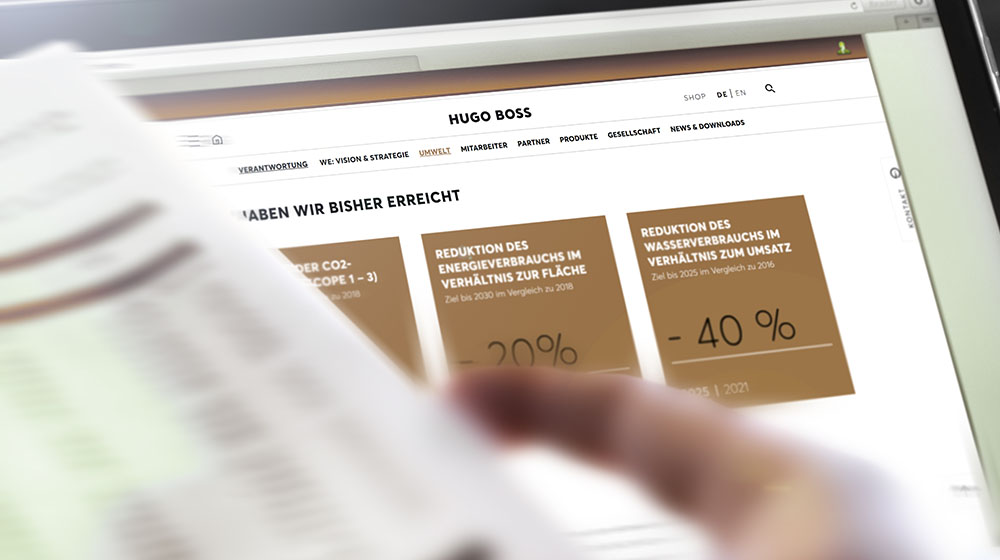
Materiality analysis
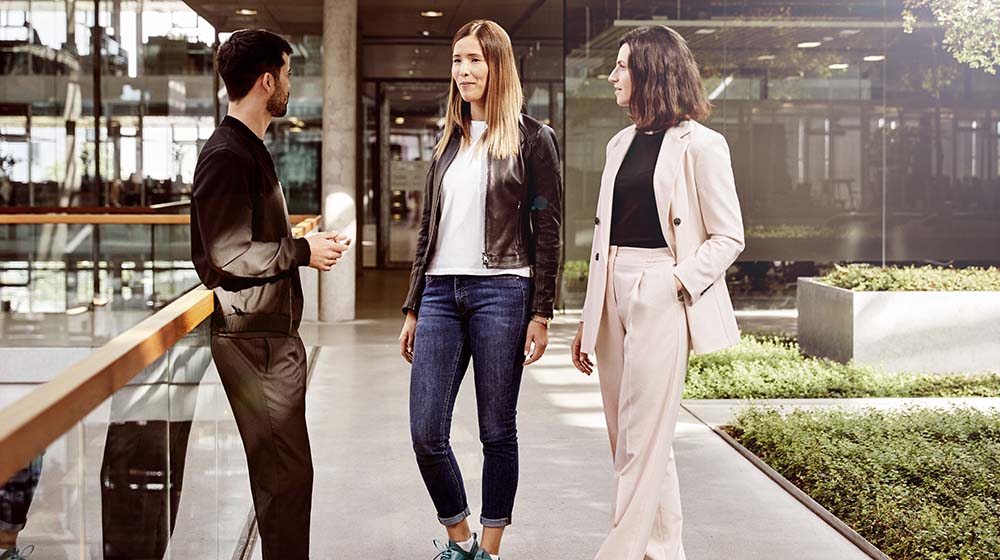
Collaboration and dialog
WE MANAGE SUSTAINABILITY ALONG THE ENTIRE VALUE CHAIN
Global partners, suppliers and customers all over the world; materials and products that go back and forth between them all: the HUGO BOSS value chain is complex. We are working on every link in the chain to make it more sustainable. Our materiality analysis, the natural capital assessment and continuous dialog with various stakeholders help us to plan and implement our activities effectively.

-
Raw materials
The basis of all our products are the raw materials, such as cotton, wool, or leather. The value chain, therefore, begins with the procurement of materials. We search for better materials like cotton from regenerative agriculture. We ensure that their production process is as resource-efficient as possible by reducing the use of resources like chemicals and water. In addition, other important aspects, such as animal welfare should be taken into account. The circular economy (circularity) is taken into consideration right from the start.
-
Yarn and fabric production
During yarn and fabric production, raw materials are processed into textiles, from which the finished products are later created. Measures for more sustainability in this area include strict management of chemicals, economization on water and waste in production, as well as reduction in energy consumption.
-
Manufacturing
The designs in the collections take shape in the garment production facility. Textiles are fitted and sewn, and prototypes and series products are manufactured. We strive to minimize waste during the cutting and sewing process, so that we deliver high-quality products, reduce the amount of rejects, and provide high standards of workplace health and safety. Our relationships with suppliers and service providers are based on a respect for human rights and the observance of high social standards.
-
Administration
To ensure that all processes run smoothly, the administration controls and monitors all the steps, from raw material procurement to the shipment of products. Here, for example, we are working on sourcing the electricity used at our own sites from renewable sources.
-
Sales
Finally, the sale of finished products takes place in the company's own retail stores or through sales partners.
-
Packaging and logistics
Different types of packaging are used along our entire value chain, and different modes of transport are used as part of the logistics process. We design these processes in a more sustainable manner, by optimizing the transport routes and using modern technology and more responsible raw materials, defined by strict standards.
SUSTAINABILITY ACTIVITIES IN DETAIL
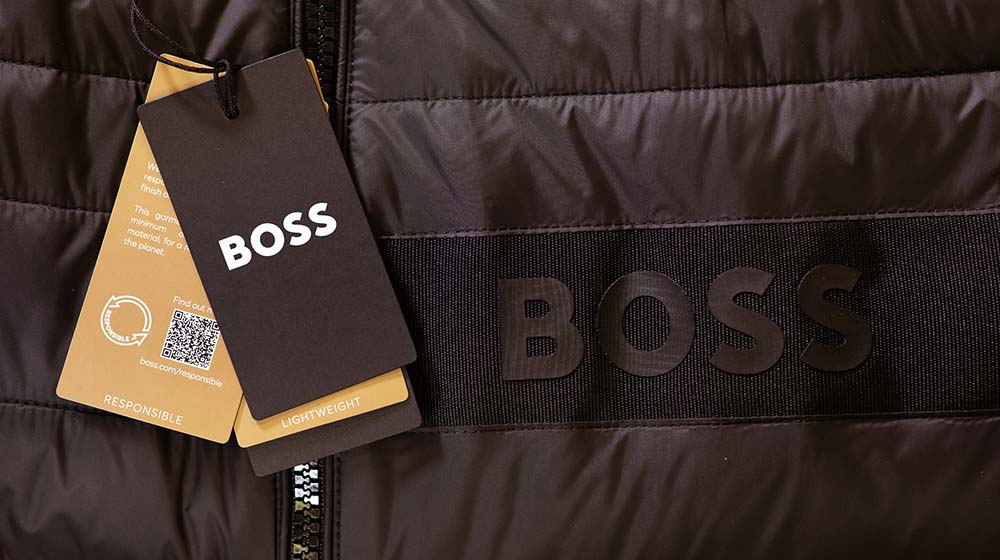
PRODUCT – innovation meets responsibility
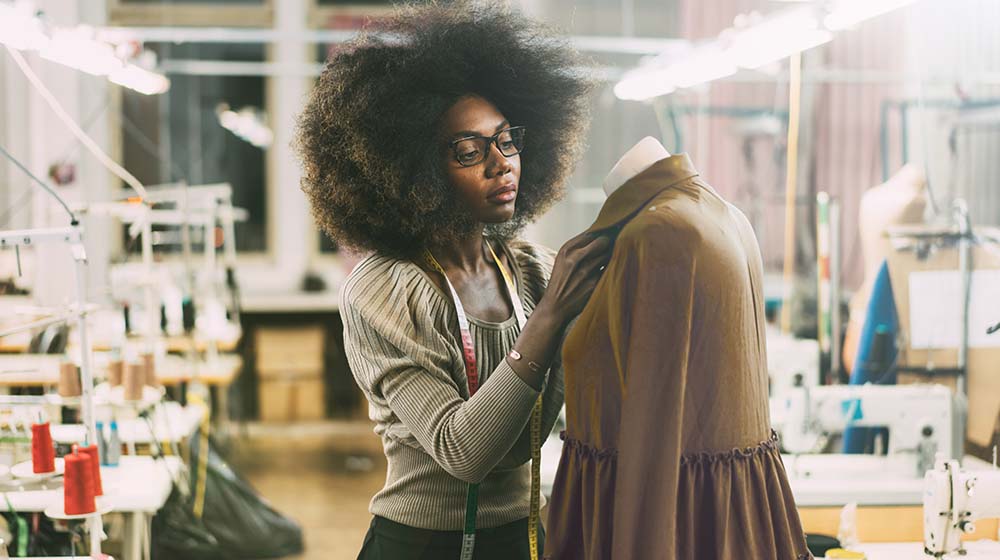
PEOPLE – responsibility for employees and for society, as a whole